

Food collections are coming to the Chichester District this Spring
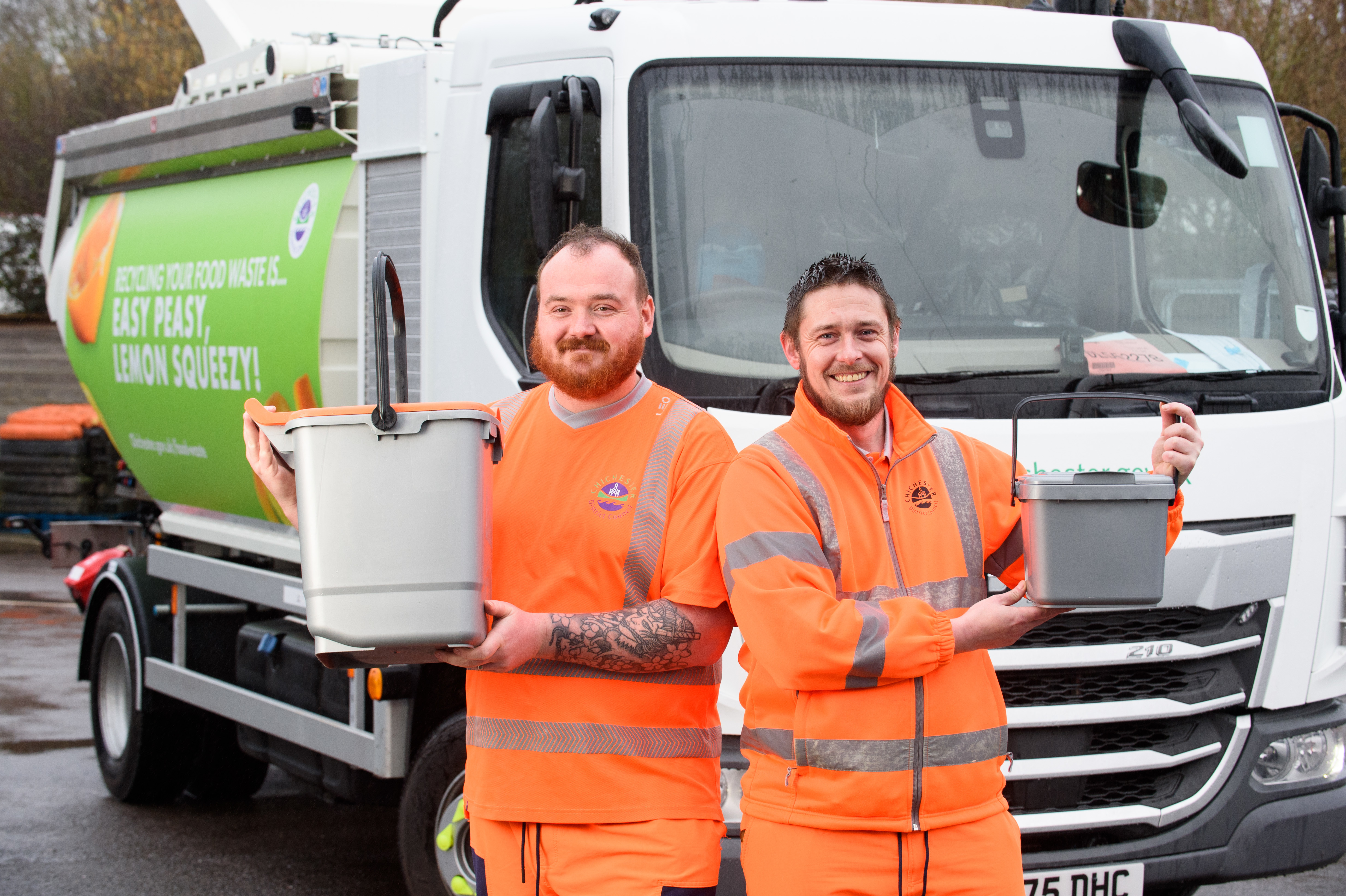
A brand new weekly food waste recycling service will start to be rolled out to residents across the Chichester District from this spring.
Chichester District Council will start issuing direct communications to households during February, beginning with information placed on residents' bins explaining what they can expect to receive. This will be followed by the delivery of a kitchen caddy and outdoor food waste recycling bin, which will include clear instructions on how to use the bins and how to check collection dates. Distribution of the new bins is due to begin in March.
This project is a huge undertaking, and we are asking residents to please bear with us as we deliver caddies and bins to every individual property across more than 300 square miles. The service will be introduced in stages, with different areas coming on board over a number of months, says Cllr Mark Chilton, Cabinet Member for Finance, Corporate Services and Chichester Contract Services at Chichester District Council.
Implementing a new service like this requires meticulous planning, but we are really pleased with the progress made so far. From March, all councils in England that do not already offer a food waste collection service must have one in place. This will be a significant change and promises to bring substantial benefits to our district — especially as around a third of the average rubbish bin in the Chichester District is food waste.
The new food waste recycling vehicles have arrived, and we will soon be receiving the bins and caddies required for the new service. Dedicated food waste rounds have also been designed and refined using specialist software, so a great deal of work has been taking place behind the scenes to prepare for the launch.
We have designed completely new rounds for this service to make sure the routes are as efficient as possible. This means that when the service goes live it won't launch in one specific area of the district and there will be staggered start dates for different areas. Collection dates may also be different to our existing crew rounds. This is why were encouraging residents to download our free Chichester District Council app or visit: www.chichester.gov.uk/checkyou... where the dates will be available at the start of March.
We want to make sure residents have all the information they need to make this a great success. We have already started issuing regular updates about how the new service will work, including within our council magazine initiatives and on social media. We are also encouraging people to download the app and visit our dedicated webpages at: www.chichester.gov.uk/food-was... for the latest guidance and frequently asked questions.
The service will be very easy to use, and regardless of how much food waste a household produces, it all counts. We want to recycle more and waste less — and every household can play a part.
Residents are encouraged to download the free Chichester District Council app from the Apple App Store or Google Play Store to receive live updates during the rollout, including container delivery and collection start dates. To find out more about the app, people can visit: www.chichester.gov.uk/chichest.... These dates will also be available on the councils Check your bin day webpage at the start of March: www.chichester.gov.uk/checkyou...
As the service is being introduced in phases, delivery timings will vary by area. If residents have not received their new caddy by their first collection date — which can be found at: www.chichester.gov.uk/checkyou... — from the beginning of March, they are asked to complete an online form at: www.chichester.gov.uk/food-was....
Once the service begins, residents will simply need to place food waste — such as plate scrapings, peelings, and tea bags — into their kitchen caddy. When full, the contents should be emptied into the outdoor food waste recycling bin, ready for weekly collection.
Food waste includes uneaten food and plate scrapings; dairy products, such as cheese and eggs; bread, cakes and pastries; raw meat, cooked meat and bones. It also includes tea bags, coffee grounds, cooked vegetables, peelings, fish, pasta, rice, and beans.
Once collected, food waste will be recycled at an anaerobic digestion facility in Horsham where it will be used to generate natural forms of energy, such as biogas and bio fertilisers. This is a much more efficient and environmentally friendly way of processing food waste.