

Romans Around Us - 9 Parts of Roman Chichester You Probably Pass Every Day
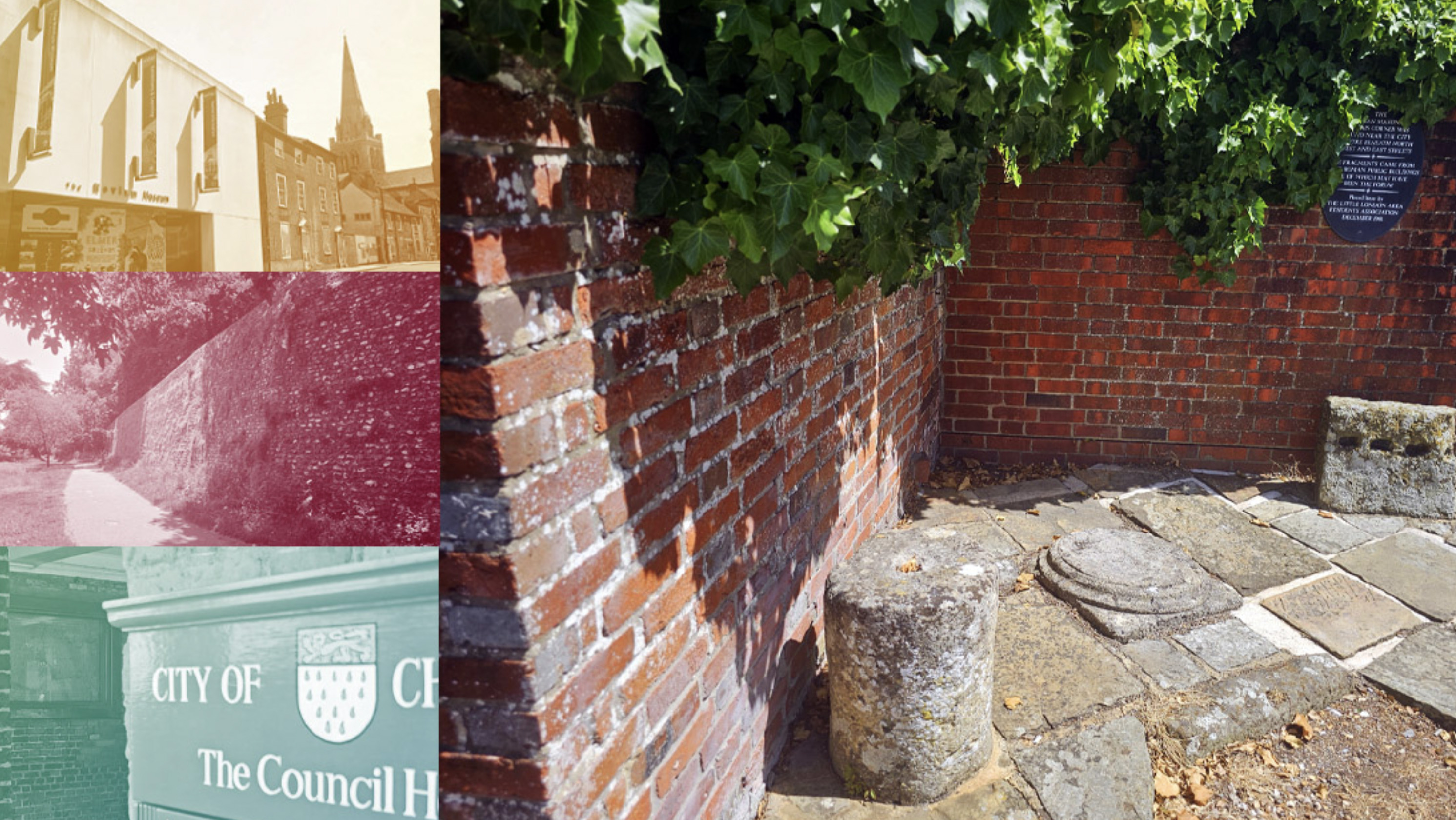
Chichester celebrates its origins with the annual Roman week—a perfect time to take a look at the city's heritage all around us.
When you're walking down Chichesters main streets, youre likely to be just a short distance from a fascinating glimpse at the citys origins. The Romans were the city's day one, with little evidence of a settlement before they successfully invaded Britain under Emperor Claudius in AD 43, leaving an immensely important heritage.
While the Saxons and Normans later came along to shape Chichester as a medieval market town, they were building on a well-established hub of activity. In the 21st century, much of Roman Chichester lies underground, and it likely remains well preserved, as the city we know today has risen above it. However, the remnants aren't just to be found at the phenomenal local heritage centres of Fishbourne Roman Palace or the Novium Museum; you likely wander past some on every shopping trip.
Here are nine parts of Noviomagus Reginorum (the modern Latin phrase closest to what we think the Romans may have called the settlement) that Chichester residents regularly pass in their daily lives.
1. The Pudens Stone
The Pudens Stone is surely the oldest part of North Street, even beating St Olavs Church, which was built around 1050 AD. Embedded in the west wall of The Council Chamber in the early 20th century, the stone is believed to date from between AD 43 and 80. Its inscription details the construction of an ancient temple dedicated to the gods Neptune and Minerva. It is particularly historically significant because it refers to the Roman client-king, Tiberius Claudius Cogidubnus, who is thought by some to have lived at Fishbourne Roman Palace.
This incredible artefact was discovered by workmen on the nearby corner of St Martin's Street and North Street in 1723. Unfortunately, they unwittingly broke it into four pieces in the process.
2. Tower Street Car Park (The Novium Museum)
One reason the Novium Museum doesn't have dedicated parking is that the redevelopment of Tower Street removed the car park. That amenity hid the impressive remains of a Roman bath, now a centrepiece of the ground floor of the nearby museum, which opened in 2011.
Archaeologists uncovered evidence of the baths in the early 1960s and early 1970s, with the building's size and the presence of a hypocaust (underfloor heating) serving as telltale signs that this was once one of the city's focal points.
3. Stane Street
When you take the road from Eastgate, chances are you're driving, riding or walking in the footsteps of Roman legionnaires and traders. Thats where Stane Street begins. Stane may be an old spelling of stone, but its a relatively new name for the 57-mile Roman Road that originally linked Noviomagus Reginorum to Londinium (London). Some think the road's construction started at our southern end, possibly as early as the first decade of Roman occupation.
West Sussex inhabitants can be proud that the route remains far more intact in their county than in Surrey. Much of it follows stretches of the A3, A24, A29 and A285, routes that provide great insight into Roman engineering, such as where it cleverly uses natural features of the South Downs and the River Arun Valley.
4. Little London Car Park
Whether wandering down into Little London or parking in the car park, you're a stones throw from some free-to-view evidence of Chichesters Roman past. Its a location that has previously unearthed 1st-century military equipment, pottery, brooches, and signs of a fort or depot, and major Roman finds remain preserved underground. Since 1981, one corner of the car park has hosted a collection of Roman masonry that might have formed part of the city's forum.
On a nearby wall, youll see a square of mosaic taken from the floor of a Roman house that stood on the same spot in the 4th century.
5. The Roman Walls
It is hard to miss Chichester's impressive walls, which can be used to navigate the city for a mile and a half. They may have received some modifications during the Medieval and Tudor eras, but they remain the most intact circuit of Roman defences in the South of England.
The 7-metre-high walls are said to comprise about 5,000 cubic meters of facing stones (flint and sandstone) and 20,000 cubic meters of chalk and rubble. An iconic feature and a scenic way to navigate the city, almost 1700 years on.
6. Priory Park
The Medieval Guildhall and the tell-tale mound of a Norman motte and bailey may be more evident, but Priory Park was once a hotbed of Roman activity. Scans have revealed three near-complete Roman buildings, including a private hot tub and a luxurious townhouse.
You may sometimes see digs underway, under the auspices of the Novium Museum, and the park is a natural place for Roman reenactments come the annual Roman Week.
7. Roman Mosaics at Chichester Cathedral
When you walk past the Chichester Cathedral on West Street, you're not just passing a stunning example of Norman, Gothic and (a bit of) Victorian architecture, but some important Roman heritage too. The cathedral was founded in 1075 AD, but excavations in 1966 revealed a mosaic from a 2nd-century public building beneath it.
Composed of chalk, brick and limestone, the mosaic remains in its original location, visible through a glass section in the South Aisle.
8. The Roman Amphitheatre
If you're passing through Eastgate, you're near what once was Chichester's centre of entertainment. Located just outside the city walls are the remains of the 1st-century amphitheatre, now mostly buried and preserved underground.
The oval remains are still visible on the ground, tracing the line of what is one of only a few Roman amphitheatres found in the UK.
9. Bishop's Palace Gardens Bastion
One of the town's old bastions may be seen in the wall surrounding the Bishops Palace Gardens, clearly visible from Avenue de Chartres. While motoring between South and West Street, you might be able to imagine the ballista that would have once stood on the defensive tower, sending bolts or stones in the direction of whats now Waitrose.
Chichesters Roman Week runs every May half-term and features a host of activities that celebrate Chichester's origins for families. If one week's not enough, remember you're never too far from the Romans in Chichester!