Restoring the Organ at Chichester's St. John's Chapel
I recently had the privilege of hearing Alan Thurlow play the restored organ at St John's Chapel at an event organised by the Friends of Chartres. Alan has an encyclopaedic knowledge of the history of the organ and wrote the following article for the Chichester Society with whose kind permission it is reproduced here.
Vicki/Ed
Alan Thurlow recounts a story with over 200 years of history
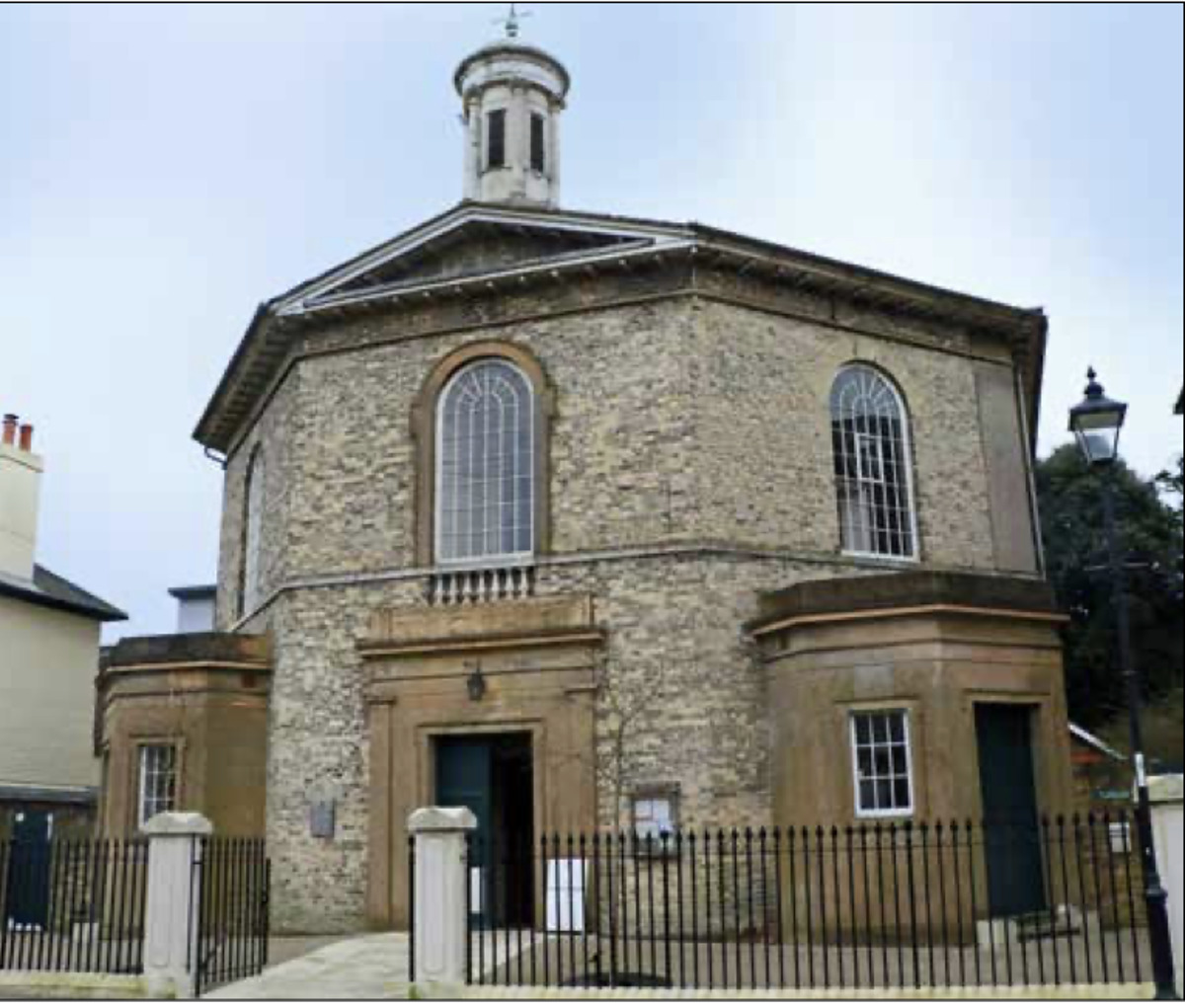
Chichester's increasing population during the eighteenth century led to land in the south-east quadrant being developed for housing. The medieval Pallants were first, but the pressure continued into the early years of the nineteenth century, leading to development of the former Black Friars estate, now known as New Town. A larger population also meant increasing demand for sites by congregations of small medieval churches within the city walls. From this emerged the desire to build a new church to serve the residents of fine houses built in what became St Johns Street.
A new church in 1813
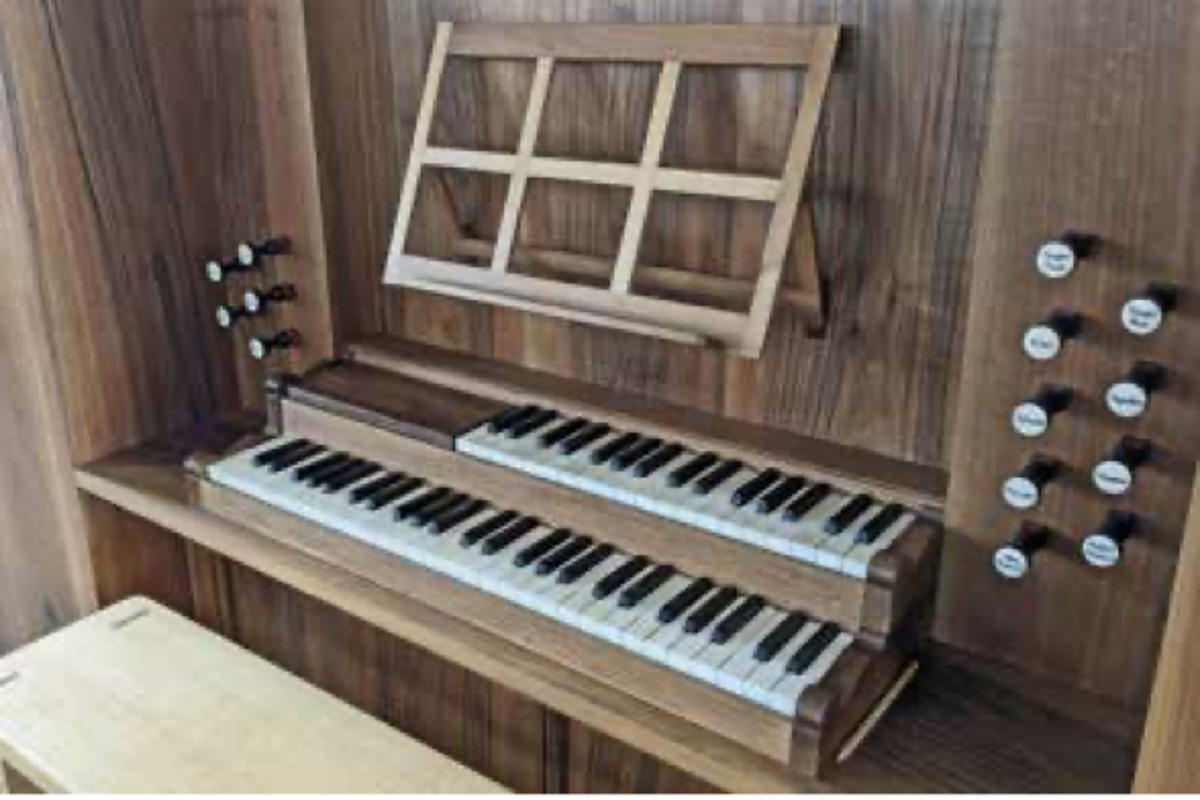
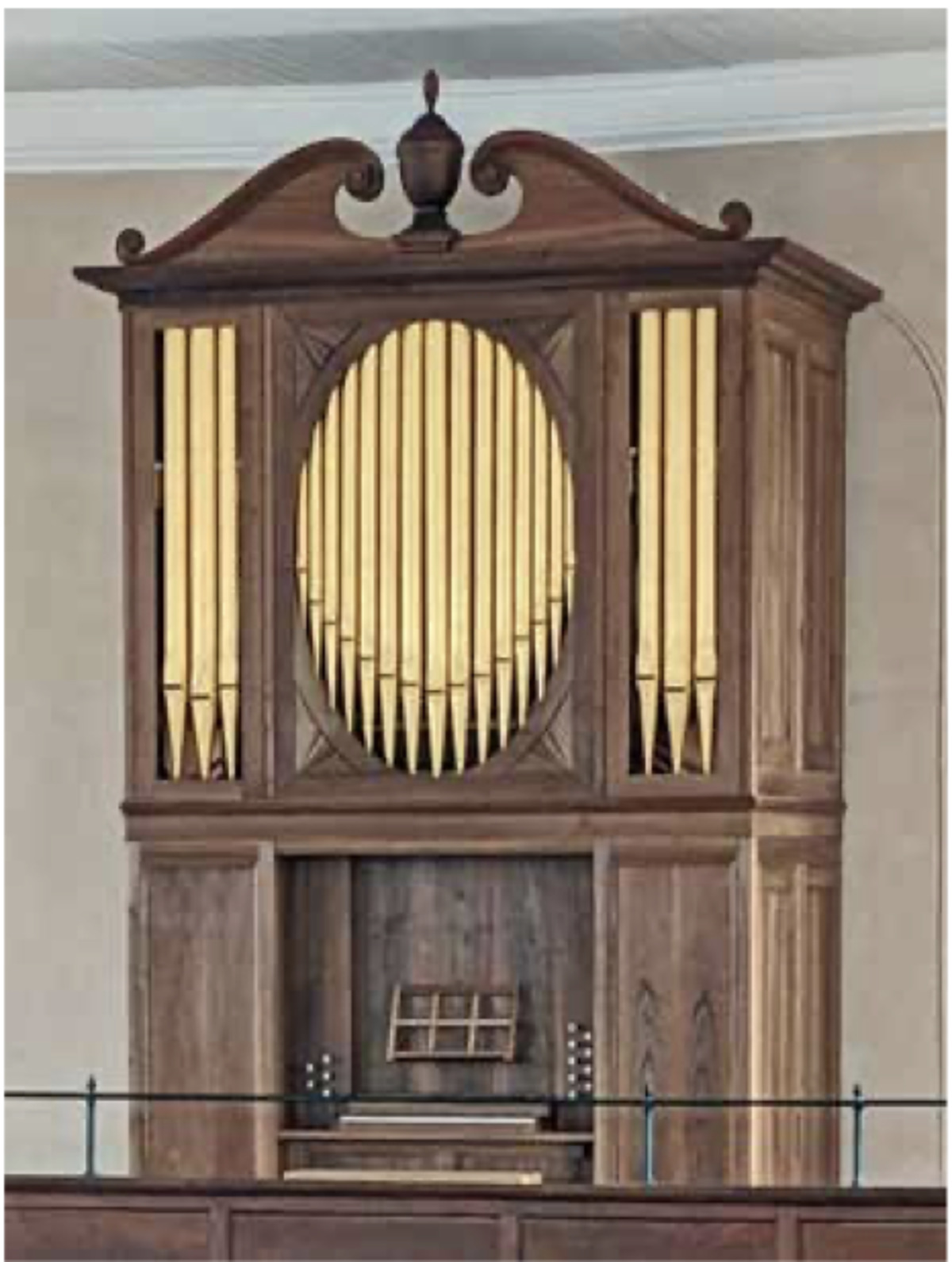
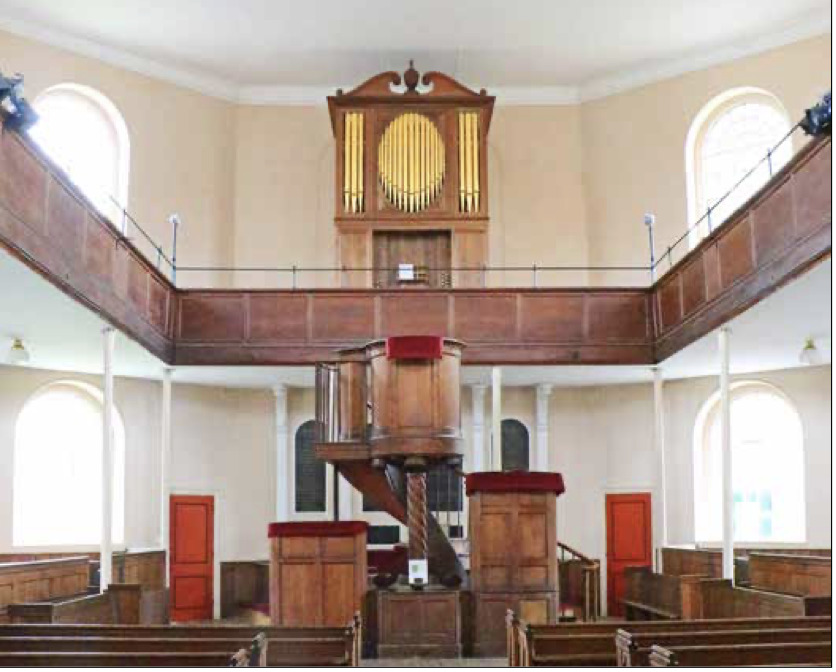
St John's was built in 1813 as a Proprietary Chapel, the money being raised by private subscription. Prime among those initiating the project and a shareholder in the cost of construction was John Marsh, a Gentleman, diarist, and musical dilettante who lived at 7 & 8 North Pallant. Marsh insisted that an organ was included in the plans for the new Chapel and James Elmes, the architect who designed the church, also provided drawings for the organ case, specifying its position on the gallery as part of his original plans. The chosen organ builder was George Pyke England, who had previously rebuilt Chichester cathedrals organ in 1806. George England was significant as being one of our country's last great classical organ builders before the emergence of romantic organs inspired by Henry Willis organ built for the Great Exhibition of 1851. In common with English tradition at the time, St John's organ had no pedals, a short-compass Swell (finishing at the G below middle C), and a long-compass Great which provided a few selected pipes sounding lower than the usual bottom note of an organ keyboard. As intended by John Marsh, music was always important in the chapels worship. Among St Johns earliest organists were father and son Thomas and Henry Roberts Bennett, organists in succession at Chichester Cathedral respectively from 1803-48 and 1848- 1860, who held these appointments in addition to their duties at the Cathedral.
Rebuilding the organ
Following the Victorian fashion St Johns organ was rebuilt and enlarged by Hele of Plymouth, who would go on to rebuild the cathedral organ in 1904. Hele added extra pipes and action to the Swell to complete the full compass (that is, extending to two octaves below middle C, to be identical with the lower keyboard) and he also increased the number of stops. A pedal organ was added and the organ case extended in width to hide most of the additional pipes from view. However, the tallest were inelegantly mounted against the back wall of the gallery, on either side of the case, and thus visible from the floor of the Chapel. The size of these additions necessitated a new console at the front of the organ case.
Dismantling the organ
In the twentieth century the long-serving incumbent (1902-1948) was Charles Edward Steinitz, father of the distinguished musician Dr Paul Steinitz, so music continued to be an important part of worship at St Johns. However, after the Second World War congregations dwindled and St John's fell on hard times until it was eventually closed in 1973. Being Grade I Listed, it was vested in the then Redundant Churches Fund. But dry rot was discovered in 1980 at the central alcove on the gallery into which the organ was slightly recessed. It had to be dismantled so the alcove could be demolished and the opening in the wall filled in. Had this been France, Germany or Holland, the instrument would have been classed as a national treasure and funding would have been available to have it restored. Sadly, this is not the case in our own country, so for close on half a century the instrument had remained stored in pieces on the gallery.
A large donation
In the early years of this century the Friends of St John's started a fund to raise money towards the cost of restoring the organ to its original specification and design. A full-size photographic image of the case was made and put in position on the gallery to remind people of what had once stood there, but sadly the cost of restoration proved beyond their ability to raise funds, so the project fell into abeyance. By good fortune in 2022 a local private Charitable Trust was looking for a special project to mark the fiftieth anniversary of its foundation. As its founder, Mrs Barbara Stocker, had lived in the Pallants and would have known the church before it closed, the Trustees offered to pay the cost of restoring the organ in her memory.
During the past year, under the guidance of eminent organ historian and consultant Dr Nicholas Thistlethwaite, the specialist firm of Goetze & Gwynn from Worksop has restored the organ to its original form. Of necessity the case you now see is entirely new except for the original display pipes, which have been regilded. Thanks to the existence of the architect's original drawings plus detailed notes made by organ historian Alexander Buckingham who visited St Johns in 1825, together with Victorian photographs, the new case is an exact re-creation of what was formerly there. Inside the organ, original action and pipes have been reused wherever possible. The opening recital was given on 25 October 2024 by internationally renowned organist Margaret Phillips, who specialises in early English organ music and performance. It also featured in the autumn of 2024 in a Handel Organ Concerto performed by our local Baroque orchestra The Consort of Twelve with Timothy Ravalde, Assistant Organist at Chichester Cathedral, as soloist. Such is the interest aroused by this project that many groups of organists, as well as individual players, are booking up to visit Chichester to see, hear and play the organ for themselves.
……………………….
Alan Thurlow served as Organist and Master of the Choristers at Chichester Cathedral from 1980 to 2008.
Image credits: Brian Henham and Tina Thurlow
If you are interested in joining these groups you can find further info below