Bosham: Where the Bayeux Tapestry Begins
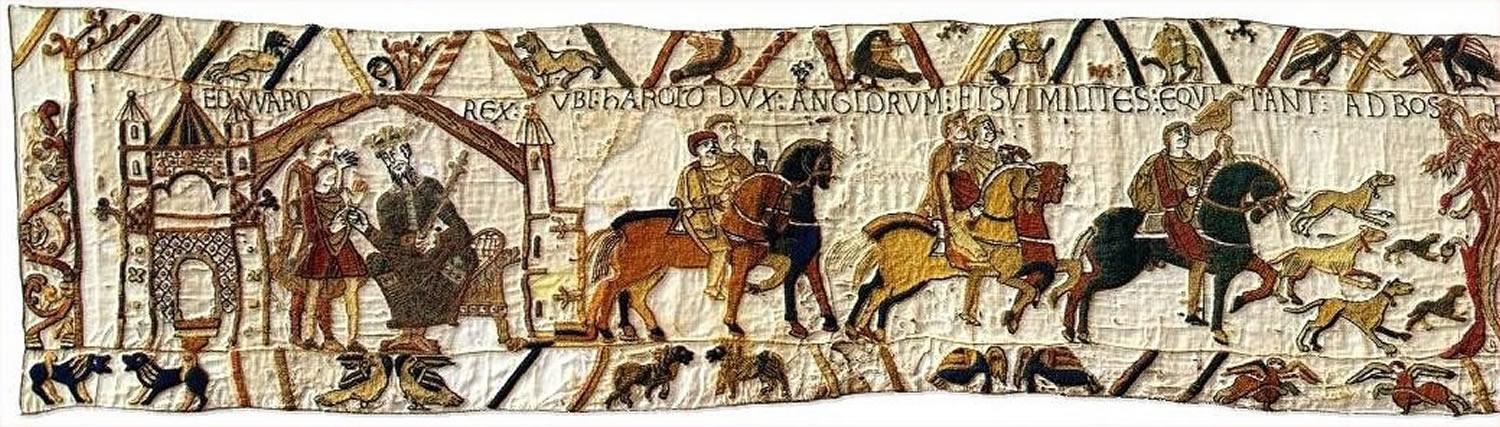
One of the world's greatest works of art doesn't begin in Normandy or at the Battle of Hastings. It begins beside Chichester Harbour.
Most people know the Bayeux Tapestry tells the story of the Norman Conquest of England in 1066. But few realise that its opening scenes are set just a few miles from Chichester, in the beautiful harbour village of Bosham.
Before the armies marched, before arrows flew over Hastings, and before William became the Conqueror, the story begins quietly in a Saxon village that many of us know and love today.
A village fit for a king
In 1064, Bosham was one of the principal homes of Harold Godwinson, the powerful Earl of Wessex. Within two years he would become King Harold II, the last Anglo-Saxon king of England.
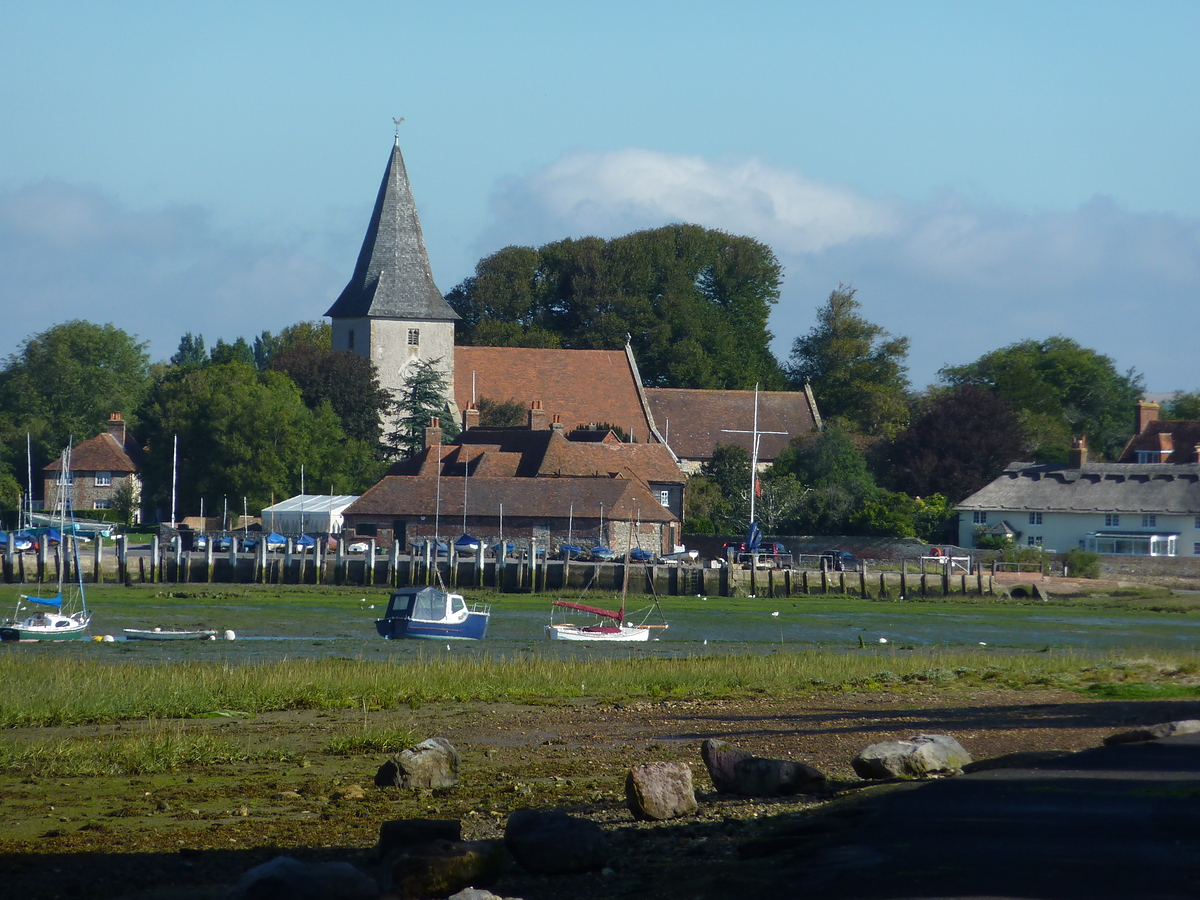
The Bayeux Tapestry opens by showing Harold leaving the court of King Edward the Confessor and travelling to Bosham. The embroidery shows him arriving at his great manor beside the harbour before entering the church to pray.
Today, almost a thousand years later, visitors can still stand outside Holy Trinity Church and look across the water where Harold once lived. Archaeologists believe his manor stood close to the church, making this one of the very few places in England where the landscape of the tapestry can still be recognised.
The Bosham scenes
The embroidery then tells the story almost like a medieval film.
First, Harold prays in the church.
Next comes a magnificent feast with his companions. Long tables are laden with food while servants wait on the guests. It is one of the tapestrys most detailed glimpses of everyday life among Englands ruling elite.
Finally, Harold walks down to the harbour where ships are waiting. The sails are raised, the oars are manned and the fleet departs across the Channel.
It is an extraordinary thought that one of the most famous journeys in English history began from the peaceful waters of Bosham.
A journey that changed history
Harolds destination was Normandy.
Historians still debate exactly why he made the journey. Some believe he was sent by King Edward on a diplomatic mission. Others think he intended to negotiate the release of family members held overseas.
Whatever the reason, things did not go according to plan.
After landing in France, Harold was captured by a local count before eventually meeting William, Duke of Normandy. During his stay he swore an oath to William—an event shown in dramatic detail on the tapestry.
When Harold later became King of England in January 1066, William claimed that oath had been broken. It became one of the principal reasons he gave for invading England later that year.
Without Harolds departure from Bosham, history might have unfolded very differently.
Not actually a tapestry
One of the first surprises is that the Bayeux Tapestry is not really a tapestry at all.
A tapestry is woven on a loom. This remarkable work is actually an embroidery, stitched onto long strips of linen using coloured wool threads.
Stretching almost 70 metres in length, it contains hundreds of human figures, horses, ships, castles, animals and mythical creatures, accompanied by Latin captions that explain the unfolding story.
Most experts believe it was embroidered in England during the 1070s by highly skilled English needleworkers before being taken to Normandy. It is thought to have been commissioned by Bishop Odo of Bayeux, William the Conquerors half-brother.
Nearly a thousand years later it remains one of the most important historical artworks ever created.
The worlds first graphic novel?
Many historians describe the Bayeux Tapestry as the worlds first graphic novel.
Scene follows scene without interruption, telling a dramatic story through pictures rather than paragraphs. It captures diplomacy, hunting, shipbuilding, feasting, warfare and everyday medieval life with astonishing energy and detail.
For historians it is priceless. It shows how people dressed, what weapons they carried, how ships were built, how castles looked and even how meals were served.
Every time you look closely, there is something new to discover.
A once-in-a-generation opportunity
For the first time in almost a thousand years, the Bayeux Tapestry is expected to return to England.
From September 2026 until July 2027 it is due to be displayed at the British Museum while its permanent home in Bayeux undergoes extensive renovation.
Because of its immense age and fragility, the move has required years of planning. Specialists have developed a climate-controlled transport system to protect the embroidery from vibration, changes in humidity and fluctuations in temperature during its journey across the Channel.
At the museum it will be displayed inside a specially engineered glass case, allowing visitors to experience almost the entire embroidery in carefully controlled conditions.
For many people, it will be a once-in-a-lifetime opportunity to see one of the worlds greatest medieval treasures.
Looking at Bosham differently
Next time you visit Bosham, pause for a moment beside the harbour.
Watch the tide. Look towards Holy Trinity Church. Imagine Harold riding into the village nearly a thousand years ago before walking through the church door, sharing one final feast with his companions and setting sail across the Channel.
Those moments, embroidered in wool and linen nearly a millennium ago, became the opening chapter of one of historys greatest stories.
The Battle of Hastings may have changed England forever.
But the story begins here, in Bosham.